
Why Cracks Appear
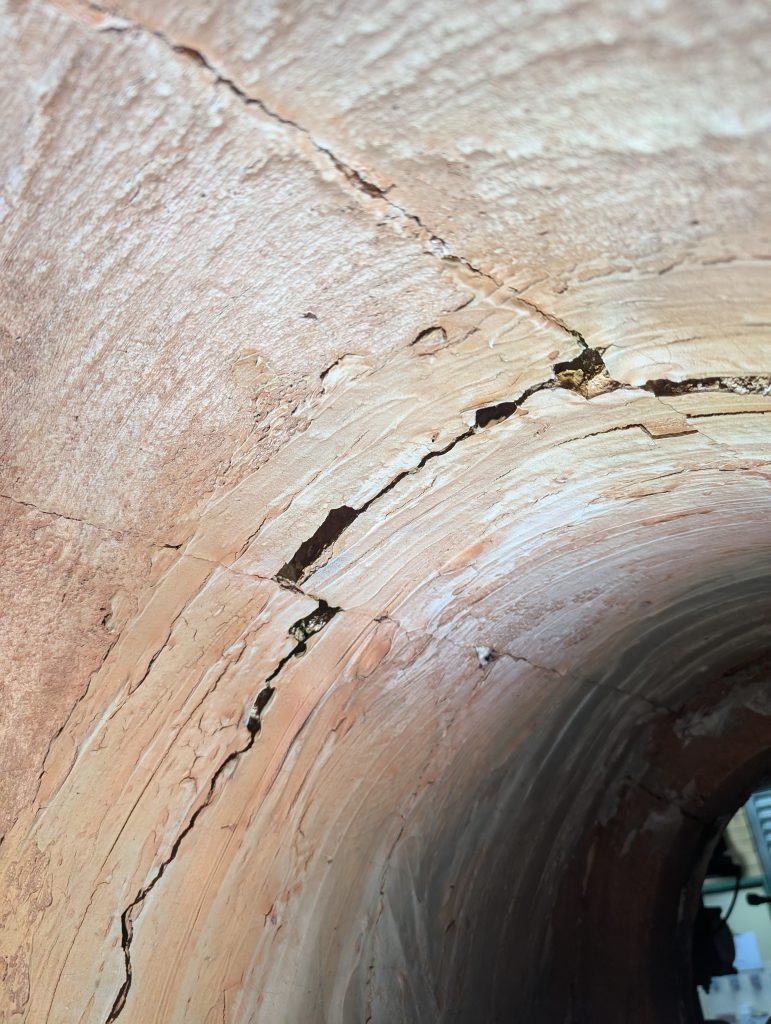
You’ve opened your boiler for its annual inspection and realised a large crack in the lining. Sometimes, these are typical, and sometimes, they spell disaster. Often, there is a fine line between the two, and it is essential to assess these cracks in the refractory lining. First, to determine whether a cracked refractory lining is a concern, you need to understand what has caused the crack in the first place.
Thermal Expansion
Like most materials, bricks expand at higher temperatures, and the amount they expand depends on several factors, such as temperature and composition, but for most firebricks, this is around 0.4 % at 1000 °C. The force exerted due to this expansion is immense, and the bricks will continue to expand or force outwards until they have reached this expansion, whether boiler tubes are in the way or not. This is the cause of a majority of cracks found in brick walls. Proper installation of bricks involves adding an expansion joint, commonly a joint in the brickwork filled with a compressible material. Even if this expansion joint is added at appropriate intervals, the bricks may still crack, as they may expand differently than expected, and the walls don’t expand uniformly.
Along the same lines, differential expansion can play a large part. As discussed, each material expands at a different rate based on its composition. If two materials that expand at different rates are placed next to each other, such as brickwork against steelwork or a brick of varying composition, the two will interact and cause cracks to appear. This can be easily overcome by proper design and understanding of the materials in the boiler and the conditions they will be under.
Ballsitic Impact
One (hopefully!) obvious source of cracks is ballistic impact, or otherwise put, hitting the refractory lining. This can be due to the design of your unit (solid biofuel burner with throwers) or negligence of the operators (overloading or improper loading of a bogie, or minimal care on closing/loading). While dense bricks are designed for hot environments, the hotter the lining, the more vulnerable it will become to impacts, so once that lining is at 800-1000 °C and is hit with a barrage of wood chips, it will certainly have more of an impact than when it is at room temperature.
Thermal Shock
The final main reason for cracks in brickworks is repeated hot and cold cycles, with significant temperature variation. This could be due to repeated on-and-off cycles or a unit that often switches between low and high fire. As the bricks fluctuate in size and the material structure changes, this can cause weaknesses in the brick, which causes cracks over time.
Are All Cracks Bad?
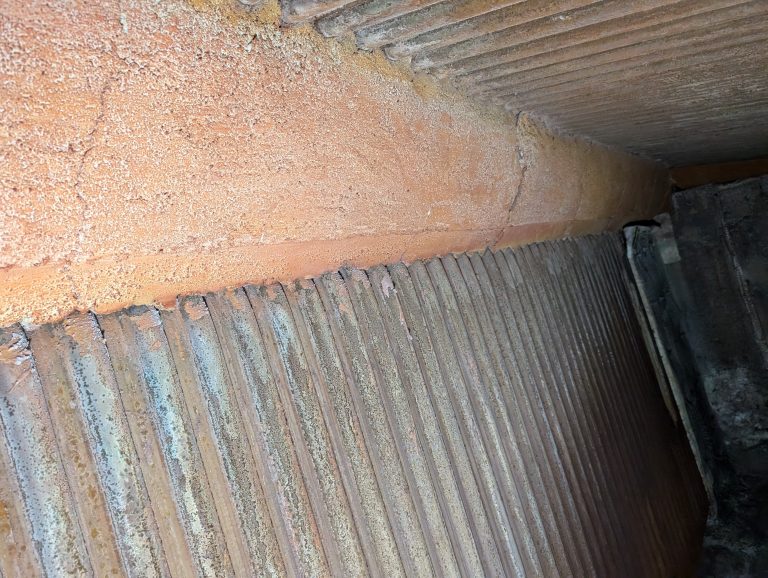
Understanding why your refractory lining has cracked will help determine whether it is an issue or a regular part of its lifespan. Some cracks are ‘room-temperature cracks’; in other words, they are only visible at room temperature, and these cracks disappear when the unit is at operating temperature. Other settling cracks may appear after the unit has been fired once or twice since the repair. These cracks are also expected and not an issue, provided they don’t follow the categories below.
Sharp brick or refractory castable edges are also a source of cracking or spalling. If a material does not have a way to dissipate its heat, it will commonly crack or spall at the point of the most significant temperature difference. Every material out there doesn’t handle sharp temperature ramps very well! This type of spalling is quite common and is not a concern, but it should be monitored to ensure the damage does not progress further.
How to Identify a Concerning Crack
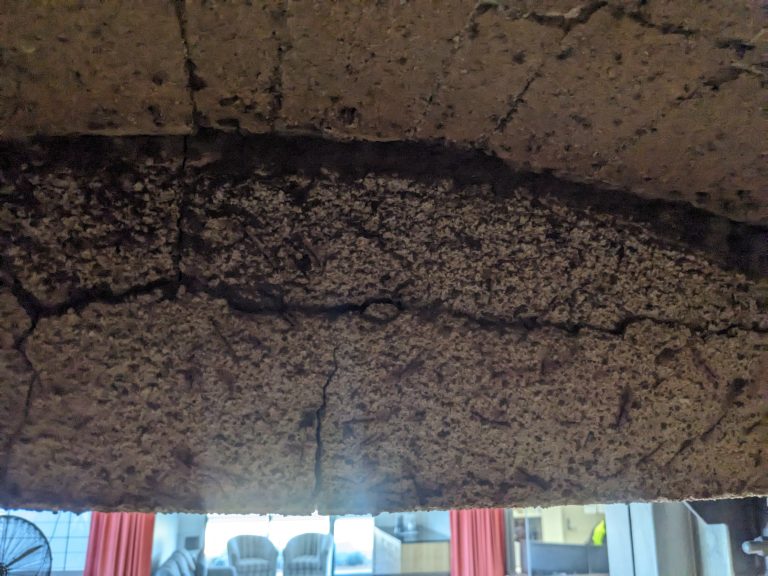
Now you should briefly understand some common causes of refractory cracks, you can use that knowledge to assess their severity and level of concern. Below are some easy ways to determine whether you should be worried about a crack. While this list is far from extensive, it should give you an initial understanding of what to look out for.
Exposed Steelwork
If there is any exposed steelwork, be it refractory anchors or structural steel, this is a good indicator that the crack must be tended to. These cracks are commonly produced due to the difference in thermal expansion rates of the refractory castable and steelwork. If the steel heats up too much, it will likely expand into the refractory lining, pressuring it and causing it to crack. Most, if not all, steel is not designed, nor is it capable of handling the harsh conditions within your furnace or boiler, so any exposed steel can lead to further degradation of both the refractory lining and the external vessel. This can also indicate heavy wear; commonly, refractory anchors are covered by more than 25 mm of castable, so if there are any refractory anchors evident, then you have had moderate wear.
Deep/Wide Cracks
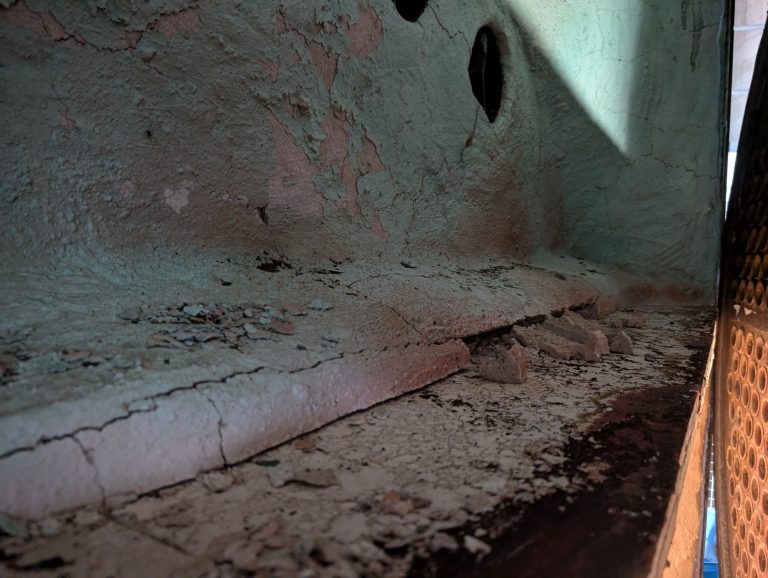
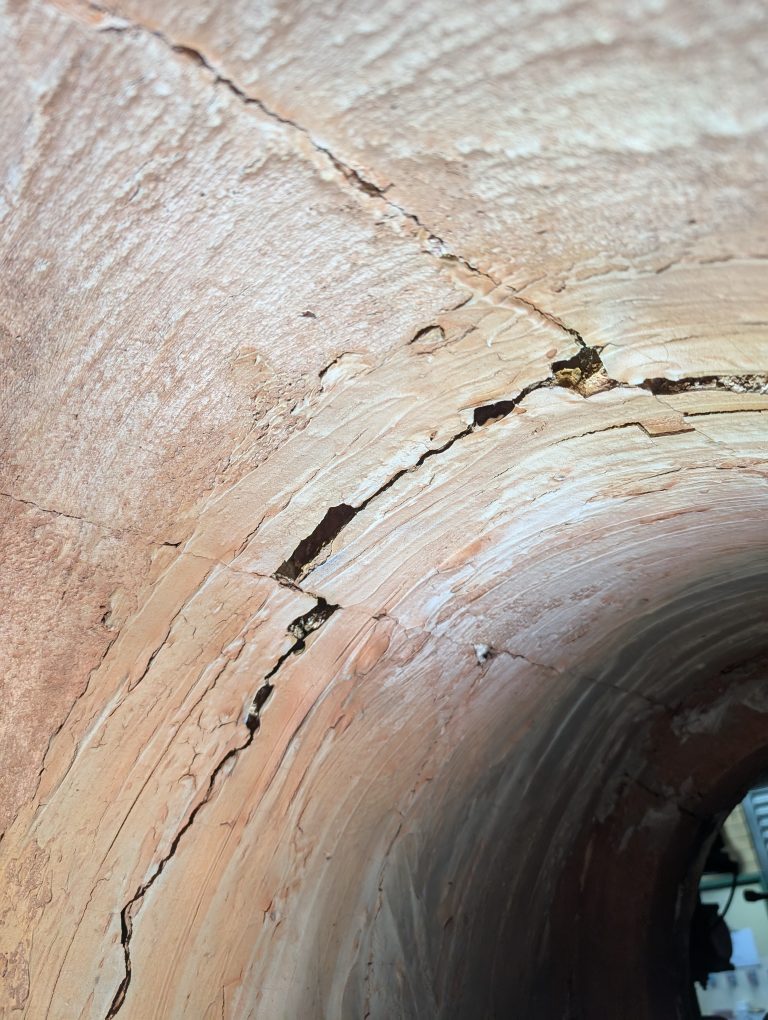
The width and depth of a crack can also indicate whether you should be concerned about it. You will often see cracks in the refractory lining, even if you have just had it installed and have only fired the unit up once. This is common, but these cracks I term ‘room temperature cracks’. That is, they appear at room temperature or when the boiler is open, but once you heat the unit up, these cracks seal themselves due to thermal expansion. To determine whether a crack is a ‘room temperature crack’ or one to be concerned about, look at the width and depth. If the crack is wider than 4-5 mm or can be seen to penetrate further into the refractory lining, then it is worth closer examination. If not, then rest assured that, more than likely, at 1000 °C, these cracks will not appear!
Location, Location, Location!
Like real estate, location plays a heavy part in how critical the cracks are. Cracks in the floor are rarely critical, but a crack in the middle of a supporting arch can pose a significant threat. For this aspect, consider how the crack may affect the lining as a whole and what would happen if it were to worsen. Here are some examples of non-critical locations:
- In the lining on the floor, especially if the crack is narrow and isn’t exposing the insulation layer or steelwork
- On a brick wall which is not supporting a roof or any other structure
- In a layer of castable attached to a door/plug
Some areas where cracks may appear that should be carefully examined could include:
- A lintel above an opening
- Through a brick wall that is either a single course wide (115 mm/4.5”)
- Through any section in a ceiling, especially one with minimal support
Another quite common location where a crack can appear is in a brick wall, where it propagates directly beneath a vertical mortar joint. The mortar joint can act as a force condenser, applying pressure to the brick below and causing it to crack/break. If this crack propagates through a single brick, it is rarely a concern but should be monitored.
These cracks also come with the caveat that they are evaluated for the other tests previously mentioned (thickness/depth, exposed steelwork), as a crack in a non-critical location can still be deemed critical if it ticks one of the other categories.
What to do When a Crack Appears
So, you have assessed the cracks in your refractories, now what? Rest assured, early detection is critical, and work can be performed to minimise the damage before a full reline is necessary.
Several commonly available materials can temporarily (or sometimes permanently) repair cracks. For a dense or hot face lining, look for a patching material, such as mouldable or rammable, that has an easy dry-out, is ideally phosphoric acid based, and is easy to install. These materials tend to be quite dense and abrasion-resistant, and the phosphoric acid will help it bond to the existing refractories. Refractory mortar can help, but coating the crack in mortar is akin to placing a bandage over a crack in your plasterboard; it can look effective but won’t help the underlying material.
If there is an issue with insulation or backup lining, you are after a ceramic fibre-based material, such as pumpable. This will maintain the insulation properties, seal the crack and easily bond to it, and remove that gap. Keep in mind that this material is not suited for direct flame, so if this is likely, another material, such as an insulation castable, may be more suited.
If the crack is too large for either of these or you are not confident performing either of these repairs, please contact a local refractory installer or repairer, who can take it from there.
How to Minimise Cracking
To an extent, cracks can be controlled and minimised to maximise the lifespan of your refractory lining. These can be:
- Ensure that the dry-out handed to you by your installer is completed as closely as possible and no corners are cut.
- The correct material is chosen for the environment.
- Expansion gaps are installed into the lining during installation to allow for thermal expansion.
- Materials with dissimilar thermal expansions are not directly bonded to each other and allowed to shift, i.e., insulation brick and hot face brick, steelwork and castable, etc.
- Any physical impacts are understood and minimised, i.e., a bogie allowed to push into a hot face brick wall or biomass fuel thrown against a target wall.
So, there you have it. Hopefully, you are now well equipped to analyse cracks in refractories, where they come from, and whether you should monitor, or repair. Understanding the composition of your lining, the mechanics at play in your unit, and a bit of consideration should be all you need to come to an informed decision on the severity of the damage. Rarely does this sort of damage require a full reline or repair if caught early enough, but if left unrepaired, it can cause significant damage, costing much more in the long run.
Have you found a concerning crack in your refractories, are unsure whether it is a significant problem, or have any other concerns regarding your refractory lining? Contact us, and we can arrange an on-site inspection or a more digital solution.
Do you have another topic you would like to see covered, or is there an aspect of cracks in refractories that you believe warrants more detail? Please reach out! We are always eager to hear from you, our valued audience!